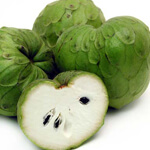
 Custard apples, also called bullock’s hearts, are the green, heart-shaped fruits of the Annona reticulata, a small deciduous tree native to Central America and the Caribbean. They are characterized by their custard-like flavor and texture, hence the name (though “custard apple” is a common nickname for many fruits, including papayas). Although they are traditionally eaten raw, indigenous people often dry and grind them into powders for medicinal purposes.
Custard apples are not well-known fruits, and research into their nutritional value is limited. According to current data, however, they do provide us with numerous health benefits.
List of Health Benefits
B vitamin complex – 100 grams of custard apples also provide us with 0.1 milligrams of thiamine (5 percent of our recommended daily intake), pantothenic acid (one percent), and riboflavin (six percent), as well as 0.2 milligrams of vitamin B6 (11 percent), and 0.5 milligrams of niacin (two percent). These are all B vitamins that provide numerous benefits, including improved energy and cellular metabolism. Custard apples do not contain folate or vitamin B12.
Great source of vitamin C – Most fruits are good sources of vitamin C, and custard apples are no exception. 100 grams of them contain an impressive 19.2 milligrams of this important antioxidant (32 percent of our RDI), which aids collagen synthesis (providing anti-aging benefits) and boosts the immune and cardiovascular systems.
Rich in dietary fiber – 100 grams of raw custard apples contain 2.4 grams of fiber, which is 10 percent of an adult’s recommended daily intake. Everyone knows that fiber encourages regular bowel movements and prevents overeating, but studies also show that it lowers cholesterol and controls blood sugar levels.
Weight loss aid – Custard apples contain negligible amounts of calories and fat, and no cholesterol. For this reason, they make a great addition to a weight loss diet. Also, their glycemic load score of 10 makes them suitable for diabetics, since eating them doesn’t spike blood sugar levels.
Anti-inflammatory properties – Custard apples contain magnesium, which regulates water balance and helps remove acids from the joints. This helps alleviate the pains associated with autoinflammatory conditions such as rheumatoid arthritis and gout.
Iron and calcium – 100 grams of custard apples provide us with 0.7 milligrams of iron (four percent of our RDI), and 30 milligrams of calcium (three percent). Iron, of course, forms hemoglobin in red blood cells, but it also boosts energy and brain function, maintains the metabolism, and much more. An iron deficiency can lead to anemia. Calcium, on the other hand, straightens our bones and teeth, and protects our heart muscles. A calcium deficiency can lead to osteoporosis and other bone diseases.
Anti-cancer properties – According to a study by researchers at the Science and Technology Faculty at Airlangga University in Indonesia, custard apples contain acetogenins and alkaloids that help us overcome renal failure and possibly even cancer. However, the researchers admit that more research needs to be done before a conclusion is possible.