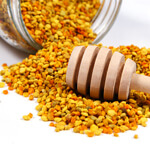
 Bee pollen, also called bee bread, is a small granule of pollen (mixed with other ingredients such as nectar and bee saliva) created by worker bees to help feed the hive. The exact chemical composition of these granules depends on the types of plants from which the worker bees gather the pollen, but they always consists of large quantities of carbohydrates, proteins, and nutrients. For this reason, bee pollen has been harvested by people for centuries as a health supplement.
List of Health Benefits
Rich in nutrients – Since bee pollen is created to feed younger bees, it must contain a large number of vitamins and minerals to help them grow. According to Royden Brown in his book, Bee Hive Product Bible, bee pollen contains all essential amino acids, 28 minerals (including calcium, magnesium, and iron), 12 vitamins (including vitamins B, C, E, and D), 11 enzymes and coenzymes, 11 carbohydrates, and 14 beneficial fatty acids. All of these nutrients work together to aid our body’s natural processes. Moreover, many of the vitamins and minerals found in bee pollen are antioxidants that contain significant immune-boosting and cancer-fighting properties.
Improves skin and treats skin conditions – According to Dr. Lars-Erik Essen, a Swedish dermatologist who pioneered the use of bee products for skin issues, bee pollen’s high concentrations of nutrients provide skin-boosting properties when applied topically: “[Bee pollen] seems to prevent premature aging of the cells and stimulates growth of new skin tissue,” says Dr. Essen. “It offers effective protection against dehydration and injects new life into dry cells. It smooths away wrinkles and stimulates a life-giving blood supply to all skin cells. The skin becomes younger looking, less vulnerable to wrinkles, smoother, and healthier with the use of honeybee pollen.” Dr. Essen also notes that bee pollen, when taken externally or internally, can help treat acne, eczema, and many other skin conditions.
Boosts fertility – According to a 2011 study published in The Journal of Animal Physiology and Animal Nutrition, male rabbits that were fed bee pollen experienced noticeably improved fertility, semen quality and blood profiles compared to the control group. Additionally, young rabbits that were fed bee pollen experienced improved body weight and a higher survival rate. The researchers, based at Damanhour University in Egypt, concluded that bee pollen could improve fertility and reproduction rates in animals, and that these results could transfer to humans.
Aids the cardiovascular system – Spectral analysis confirms that bee pollen contains large concentrations of rutin, a bioflavonoid that is known to strengthen blood vessels and capillaries, aid with circulatory issues and stabilize cholesterol levels. Moreover, rutin’s proven anti-clotting abilities can help guard us from heart attacks and strokes.
Potent natural energizer – Considering that the average bee pollen granule is comprised of 55 percent carbohydrates and 35 percent protein, it shouldn’t be a surprise that it is a significant source of natural energy. Consuming one tablespoon of bee pollen before hitting the gym, for example, will certainly improve the length and quality of your workout. Moreover, bee pollen’s impressive protein content makes it a great supplement for bodybuilders.